Heat Exhaustion vs. Heatstroke: Know the Difference Before It Becomes an Emergency
By : Housepital, Published on : 08 Jun 2026
Heat Exhaustion vs. Heatstroke: Know the Difference Before It Becomes an Emergency
India's summers are getting longer, hotter, and deadlier with every passing year. In 2024 — the warmest year in India since 1901 — the country recorded nearly 48,000 heatstroke cases and at least 159 confirmed heat-related deaths. Independent researchers at HeatWatch put the actual toll closer to 733, citing significant gaps in India's disease reporting infrastructure. Between March and June of that year alone, 37 cities crossed 45°C, and the heat wave was the third consecutive year of extreme temperatures, a trend climate scientists attribute in large part to accelerating climate change. For anyone caring for an elderly parent, a young child, or a person managing a chronic illness, knowing the difference between heat exhaustion and heatstroke is not just useful information — it is a potential lifesaver.
Understanding Heat Exhaustion: The Body's Warning Signal
Heat exhaustion is the body's early distress response to losing too much water and salt, typically through heavy sweating during prolonged heat exposure or physical activity. Think of it as your body raising a red flag before the situation becomes truly dangerous. At this stage, the cooling system is struggling but has not yet failed, which means prompt action can turn things around quickly.
Symptoms include cool, pale, or clammy skin with heavy sweating, extreme fatigue, muscle cramps, dizziness or lightheadedness, a mild headache, nausea, and a fast but weak pulse accompanied by intense thirst. The person may feel faint or need to sit down suddenly. These symptoms can come on gradually or strike within a short window of heat exposure, particularly in poorly ventilated spaces or during outdoor activity in peak afternoon hours.
What to do immediately: Move the person to a cool or shaded area and have them sip water or an Oral Rehydration Solution (ORS) slowly and steadily. Avoid caffeinated or sugary drinks, which can worsen dehydration. Remove excess or tight clothing and apply cool, damp cloths to the skin, particularly the forehead, neck, and wrists. A fan helps significantly. With these steps taken promptly, symptoms typically resolve within 30 to 60 minutes. If there is no improvement after an hour, or if symptoms begin to worsen, call a doctor without delay.
Understanding Heatstroke: A Life-Threatening Emergency
When heat exhaustion goes unrecognised or untreated, it can escalate rapidly into heatstroke — the point at which the body's thermoregulatory mechanism shuts down entirely and core temperature spikes above 40°C (104°F). Unlike heat exhaustion, heatstroke does not give you a long window to act. It is a catastrophic medical emergency that can cause irreversible damage to the brain, heart, kidneys, and muscles within a matter of hours.
The numbers make the stakes clear. ICU mortality for heatstroke ranges from 10 to 65% depending on how quickly cooling begins, and research published in peer-reviewed journals shows that approximately a third of survivors sustain permanent neurological damage. India's own National Centre for Disease Control has cited a heatstroke mortality rate of 40 to 64% when effective treatment is not received in time. Delay in cooling is not just a complication — it is directly associated with higher death rates.
Symptoms of heatstroke include severe confusion, disorientation, slurred speech, or erratic and aggressive behaviour. The person may experience seizures, loss of coordination, or fall into full unconsciousness. The skin typically turns red, hot, and dry because the sweating mechanism has completely shut down — though in cases of exertional heatstroke brought on by intense physical activity, the skin may still feel moist even as core temperature climbs dangerously. The pulse becomes rapid and bounding, strong rather than the weak pulse characteristic of heat exhaustion. These are hard stops — if you see them, do not wait and watch.
What to do immediately: Call emergency services at once. Do not drive the person yourself if they are showing neurological symptoms. While waiting for help, move them to the coolest space available and douse their skin with cool water continuously. Place ice packs or cold compresses on the neck, armpits, and groin, where large blood vessels run close to the surface and cooling is fastest. Do not force fluids under any circumstances — if the person is confused, lethargic, or unconscious, attempting to make them drink creates a severe choking hazard and can make things worse.
The Key Differences
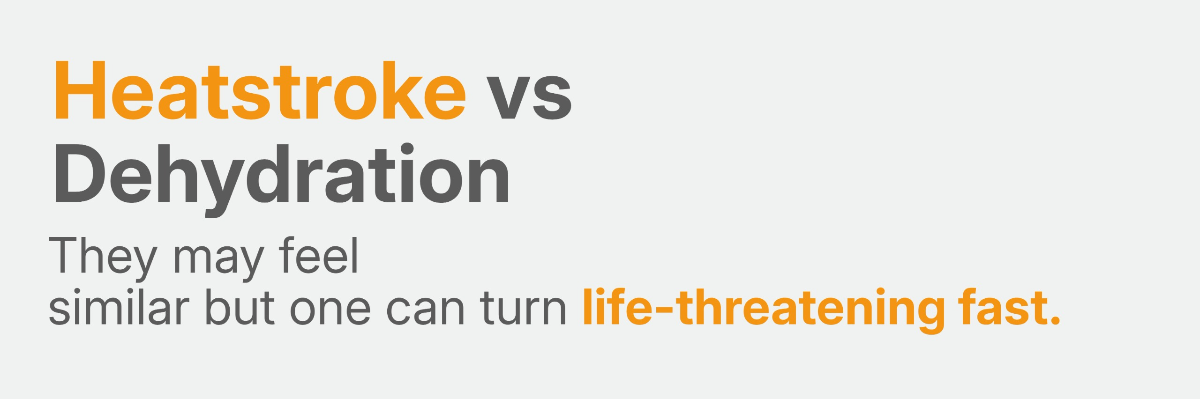
Heat exhaustion is an early, manageable condition if caught and treated quickly. Heatstroke is a critical emergency that demands immediate professional medical intervention. In heat exhaustion, body temperature is only mildly elevated; in heatstroke it rises sharply above 40°C. A person with heat exhaustion remains alert and aware, even if exhausted and unsteady; someone crossing into heatstroke may be confused, delirious, or completely unresponsive. Skin in heat exhaustion is cool, clammy, and wet with sweat; in heatstroke it turns hot, red, and often completely dry. The pulse shifts from fast-and-weak to fast-and-strong. For heat exhaustion, prioritise cooling, rest, and hydration. For heatstroke, call emergency services immediately and cool aggressively while waiting.
The Data Behind the Risk
The scale of India's heat problem is larger than official numbers suggest. While the Union Ministry of Health and Family Welfare reported 360 heatstroke deaths in 2024, the HeatWatch analysis identified 733, attributing the gap to inadequate data collection, under-reporting from rural areas, and limited awareness among some healthcare providers. Globally, around 489,000 heat-related deaths occur every year, with 45% of them concentrated in Asia. Heat-related mortality among people over 65 rose by approximately 85% between 2000–2004 and 2017–2021 according to WHO data. India saw a 55% rise in extreme heat deaths over the same period, and heat exposure cost the country an estimated 167.2 billion potential labour hours in 2021 alone — a figure that captures the economic burden alongside the human one.
Who Is Most at Risk?
Older adults above 65 are especially vulnerable because ageing reduces the nervous system's ability to detect temperature changes and regulate sweating efficiently. People managing heart disease, diabetes, kidney disorders, or respiratory conditions face significantly elevated risk because these illnesses place additional strain on the body's ability to cope with thermal stress. Those living with dementia, Alzheimer's, or Parkinson's disease present a particular challenge — they may not recognise their own discomfort, forget to drink water, or be unable to communicate that they are feeling unwell. Infants and toddlers heat up far faster than adults due to their body composition and surface-area-to-mass ratio. People taking diuretics, sedatives, antihypertensives, or certain psychiatric medications that alter hydration status or suppress sweating are also at elevated risk. And outdoor workers — construction labourers, delivery personnel, agricultural workers — continue to bear a disproportionate share of India's heat burden, as the 2024 election duty deaths made tragically visible.
Practical Prevention for Families
Prevention is always more effective than treatment. Hydrate before you feel thirsty — by the time thirst kicks in, the body is already mildly dehydrated. Keep a water bottle accessible throughout the day and introduce ORS or coconut water when spending extended time outdoors. Keep indoor spaces well-ventilated and use reflective curtains or blinds to block direct sunlight during the hottest parts of the day. Avoid going out between 12 PM and 4 PM if possible — schedule errands, walks, and outdoor activities for early morning or after sunset. Dress in loose, light-coloured, breathable cotton that allows sweat to evaporate and cool the skin naturally. Check in on elderly neighbours and relatives daily during heat waves, particularly those who live alone. And never leave children, elderly family members, or pets in a parked vehicle for any length of time — internal temperatures can reach dangerous levels within minutes, even with windows cracked.
The Housepital Commitment
Managing health through an extreme Indian summer requires more than awareness — it requires consistent, specialised attention, especially for homebound seniors and individuals recovering from complex or chronic illness. A simple daily check-in, careful monitoring of fluid intake, and the ability to spot the earliest signs of heat exhaustion can prevent a serious hospitalisation entirely.
Housepital's home care teams are trained to assess environmental risks, track hydration and vital signs, recognise warning symptoms early, and ensure that your loved ones remain safe, comfortable, and supported through every season. We understand that for many families, the challenge is not a lack of concern — it is a lack of time and proximity. That is exactly the gap we exist to fill.
If you are caring for an elderly relative or a patient with complex medical needs this summer, do not wait for a crisis to reach out. Early action, consistent monitoring, and the right support at home make all the difference.
Sources
- HeatWatch / Down to Earth — Struck by Heat: A News Analysis of Heatstroke Deaths in India in 2024. September 2024.
- Deccan Herald / PTI-RTI — India recorded over 7,000 suspected heatstroke cases, March–June 2025. July 2025.
- World Health Organization — Heat and health fact sheet, 2024.
- ScienceDirect / Bouchama et al. — Heatstroke, Encyclopedia of Respiratory Medicine, 2nd ed., 2018.
- The Lancet Public Health — Variation in reporting of heatstroke mortality: a multi-country study. March 2026.
- BBC News / The Lancet Countdown — India's 55% rise in extreme heat deaths. May 2024.
- India NCDC — Heatstroke mortality rate of 40–64% without timely cooling, via BBC, June 2024.
Need care for a loved one at home?
Trained nurses, caregivers and physiotherapists across Delhi NCR.
Explore our services