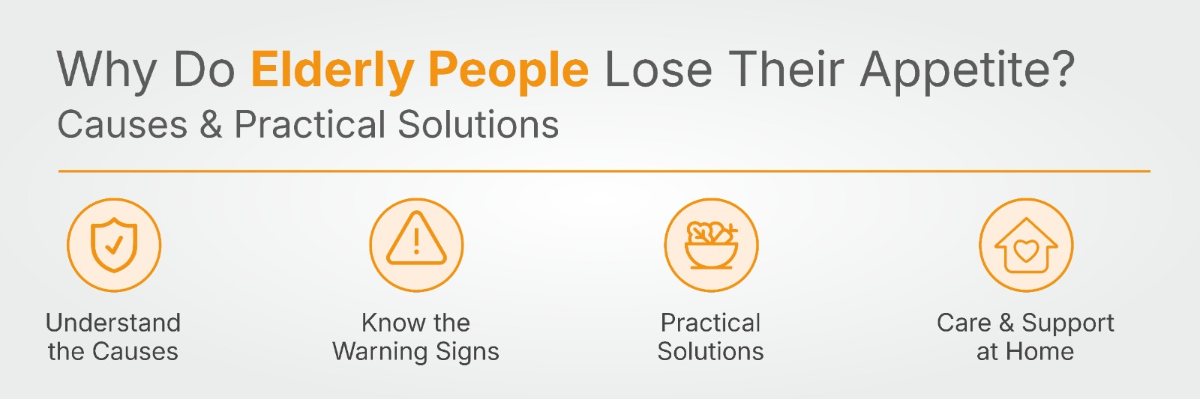
Why Do Elderly People Lose Their Appetite? Causes, Warning Signs & Practical Solutions
By : Housepital, Published on : 18 Jul 2026
As people age, it's common for their eating habits to change. You may notice that an elderly parent or grandparent who once enjoyed regular meals now skips breakfast, eats only a few bites, or says they're "just not hungry."
While occasional changes in appetite are normal, persistent loss of appetite should never be ignored. It can lead to weight loss, muscle weakness, poor immunity, slower recovery, and an increased risk of falls and illness.
Here's why it happens and what families can do to help.
Why Do Older Adults Lose Their Appetite?
There isn't always a single reason. Often, several factors contribute to reduced appetite.
1. Natural Changes with Age
As we grow older, the body's metabolism slows down, and the senses of taste and smell gradually become less sensitive. Food may no longer seem as enjoyable, causing seniors to eat less than they used to.
2. Side Effects of Medications
Many medications commonly prescribed for blood pressure, diabetes, heart disease, or pain can affect appetite or alter the taste of food.
If appetite decreases after starting a new medication, it's worth discussing with a doctor rather than stopping the medicine on your own.
3. Dental Problems
Loose teeth, ill-fitting dentures, mouth ulcers, or gum pain can make chewing uncomfortable.
Many elderly people quietly avoid eating because they simply cannot chew properly.
4. Difficulty Swallowing (Dysphagia)
Conditions such as stroke, Parkinson's disease, dementia, or neurological disorders can make swallowing difficult.
Signs include:
- Frequent coughing while eating
- Food getting stuck
- Taking a very long time to finish meals
- Avoiding solid foods
This requires medical evaluation.
5. Depression, Loneliness & Emotional Health
Eating is often a social activity. Seniors living alone or coping with grief, depression, or isolation may gradually lose interest in food.
Emotional wellbeing has a significant impact on nutrition.
6. Chronic Medical Conditions
Reduced appetite can also result from:
- Kidney disease
- Heart failure
- Cancer
- Chronic infections
- Liver disease
- Thyroid disorders
If appetite loss is sudden or persistent, it's important to identify the underlying cause.
Warning Signs You Shouldn't Ignore
Consult a healthcare professional if your loved one has:
- Unexplained weight loss
- Eating very little for several days
- Persistent fatigue or weakness
- Difficulty swallowing
- Frequent choking while eating
- Signs of dehydration
- Ongoing nausea or vomiting
Early intervention can prevent serious health complications.
How Families Can Help Improve Appetite
?️ Offer Smaller, More Frequent Meals
Three large meals can feel overwhelming. Instead, try 5–6 smaller meals or nutritious snacks throughout the day.
? Focus on Protein
Include foods such as:
- Eggs
- Paneer
- Dal
- Greek yogurt
- Fish
- Chicken
- Soy products
Protein helps preserve muscle strength and supports recovery.
? Make Meals Colourful & Appealing
Bright fruits, colourful vegetables, and attractive plating can stimulate appetite.
? Encourage Hydration
Older adults often don't feel thirsty even when dehydrated. Offer water, coconut water, soups, buttermilk, or lemon water regularly.
??? Eat Together
Sharing meals with family can make eating more enjoyable and encourage better food intake.
? Encourage Gentle Physical Activity
A short walk or light exercise, if medically appropriate, can naturally stimulate hunger.
Foods That Are Easy to Eat & Nutritious
For seniors with chewing difficulties, consider:
- Vegetable soups
- Khichdi
- Oats porridge
- Curd
- Soft fruits like bananas and papaya
- Smoothies
- Dal with soft rice
- Steamed vegetables
- Scrambled eggs
Choose foods that are easy to chew while still providing adequate nutrition.
When Should You Seek Medical Help?
Don't assume appetite loss is "just part of ageing."
If it lasts more than a week, is accompanied by weight loss, or interferes with daily health, consult a doctor. A medical assessment can identify treatable causes, and a dietitian can recommend a nutrition plan suited to the individual's health conditions.
Supporting Healthy Ageing Starts with Good Nutrition
A healthy appetite plays a vital role in maintaining strength, immunity, and independence as we age. Paying attention to changes in eating habits and seeking timely support can make a significant difference to an older adult's quality of life.
With the right medical guidance, balanced nutrition, and compassionate care, many seniors can regain both their appetite and overall wellbeing.
Need care for a loved one at home?
Trained nurses, caregivers and physiotherapists across Delhi NCR.
Explore our services