Why Seniors Are More Vulnerable During Indian Summers
By : Housepital, Published on : 09 May 2026
Why Seniors Are More Vulnerable During Indian Summers
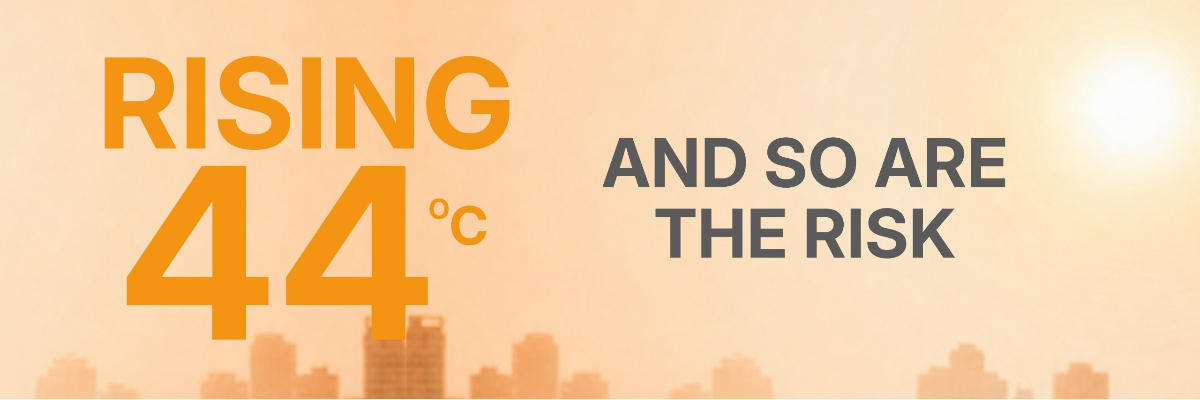
Every year, the Indian summer arrives earlier and stays longer. In 2024, with Delhi recording temperatures above 50°C, extreme heat has shifted from seasonal discomfort into a genuine public health emergency and senior citizens bear the heaviest burden.
The Scale of the Crisis
-
India recorded over 733 heat-related deaths across 17 states in 2024 — significantly higher than the government's official count of 360.*1
-
Between March and June 2024, over 40,000 suspected heatstroke cases were reported nationally, with true figures likely higher due to underreporting.*2
-
A multi-city study found temperatures above the 97th percentile for two consecutive days were linked to a 14.7% rise in daily mortality across Indian cities.*3
-
India's Ministry of Earth Sciences reports that heatwave mortality rates have risen by 62.2% over the last four decades.*4
-
Studies flagged elderly individuals, pregnant women, and neonates as the populations most frequently reported with heat-related morbidity across Indian cities including Delhi, Chennai, and Varanasi.*5
How Ageing Breaks Down the Body's Cooling System
Thermoregulation — the body's ability to maintain a steady internal temperature — becomes measurably less efficient with age. Research confirms that older adults store 1.3 to 1.8 times more body heat under the same conditions as younger people, because heat dissipation is reduced at every level.*6
-
Reduced sweating: Sweat glands lose sensitivity with age, weakening the body's primary cooling response. Skin blood flow also decreases, trapping heat inside the body for longer.*7
-
Blunted thirst signals: The hypothalamus becomes less responsive with age. A senior may be dangerously dehydrated yet feel no urge to drink — a silent dehydration risk that families often miss.*8
-
Weakened cardiovascular response: Ageing reduces cardiac output and the capacity to circulate blood to the skin for cooling — adding a double strain during peak heat.*4
-
Smaller recovery window: Even a few hours in an overheated room can tip a senior into a medical crisis. Recovery from heat illness can take days to weeks longer than in younger adults.*6
-
Altered thermal perception: Older adults often cannot accurately sense how hot they are getting, meaning they may not take protective action until it is too late.*8
Heat Rarely Acts Alone: The Compound Effect
Cardiovascular strain
When temperatures rise, the heart must pump harder to move blood to the skin for cooling. For seniors with hypertension or heart disease, this extra load can trigger sudden cardiac events. Excess heat-related mortality in some Indian cities has been recorded as high as 43% during peak heatwaves.*5
Respiratory toll
Indian summers combine intense heat with poor air quality and high dust levels. For seniors with COPD or asthma, hot and dehydrated airways make breathing laboured and exhausting. The Delhi Heat Action Plan specifically flags respiratory patients as a high-risk group.*4
Cognitive changes and confusion
-
Heat-induced electrolyte imbalances can cause disorientation and irritability that closely mimic early dementia symptoms.*9
-
The CDC notes that confusion is one of the first signs of serious heat-related illness — and critically, affected individuals often cannot recognise it in themselves.*9
-
Families should treat sudden confusion during a heatwave as a medical alert, not a sign of cognitive decline.
When Medicine Meets the Heat
Many common medications make seniors significantly more heat-sensitive. The CDC and peer-reviewed research identify several drug classes that directly disrupt the body's ability to cool itself.*10
-
Diuretics: Prescribed for hypertension and heart failure, these remove fluid from the body — compounding the dehydration that heat is already causing. Research in the Journal of Clinical Pharmacy and Therapeutics identifies diuretics as a significant independent risk factor for heat-related illness, especially when combined with ACE inhibitors.*11
-
Beta-blockers: Reduce blood flow to the skin, impairing heat release. Clinical studies show non-selective beta-blockers measurably elevate core body temperature during heat stress.*12
-
Anticholinergics and antihistamines: Suppress sweating, effectively disabling the body's primary cooling mechanism. Drugs with strong anticholinergic properties raise core temperature at ambient temperatures of 30°C and above.*12
-
Antipsychotics: Block brain signals that warn of rising body temperature. A person on these medications may not realise they are overheating until it becomes a medical emergency.*10
Important: Do not stop any prescribed medication without consulting your doctor. Avoiding heat exposure is the priority, not discontinuing medication.
A Practical Summer Care Plan for Families
01. Scheduled hydration — not on-demand Don't rely on seniors to feel thirsty — that signal is unreliable with age. Set an hourly reminder. Include traditional hydrators like aam panna, sattu, and chaas for electrolyte replenishment alongside plain water.
02. The 12–4 lockdown Outdoor activity — including sitting on a shaded balcony — should be avoided between noon and 4 pm, when radiant heat peaks and recovery from heat exposure is slowest.
03. Clothing and indoor cooling Light-coloured, breathable cotton reduces heat absorption. In homes without air conditioning, khus (vetiver) mats and heavy curtains on sun-facing windows can meaningfully lower indoor temperatures.
04. Pre-summer medication review Consult your doctor before peak summer. Doses of diuretics and blood pressure medications may need temporary adjustment during extreme heat events. Always do this under medical supervision.
05. Know the emergency warning signs Confusion, slurred speech, flushed dry skin, rapid heartbeat, and stopping sweating despite the heat are emergency signals. Seek medical attention immediately — do not wait to see if it passes.
06. Consistent vital monitoring For seniors who live alone or whose families are not always present, regular monitoring of heart rate and blood pressure catches deterioration before it becomes a crisis — especially critical during heatwave days.
How Home Healthcare Makes a Difference in Peak Summer
For families where children work long hours or live in different cities, consistently looking after an elderly parent through peak summer is not always possible. Professional home healthcare fills that gap — bringing clinical care into the one environment where seniors are safest during a heatwave: their own home.
Here is what consistent home healthcare looks like during summer:
-
Vital monitoring: Blood pressure, heart rate, oxygen levels, and temperature tracked regularly — catching a dangerous spike before it becomes an emergency.
-
Hydration management: Ensuring seniors are drinking enough fluids at the right intervals, with the right electrolyte balance — not just water.
-
Medication supervision: Making sure heat-sensitive medications are being taken correctly, and flagging concerns to the treating doctor in real time.
-
Indoor physiotherapy: Gentle, scheduled movement sessions that keep seniors mobile without any outdoor exposure during dangerous heat hours.
-
Chronic disease monitoring: Consistent tracking of conditions like diabetes, hypertension, and COPD — all of which can deteriorate rapidly in extreme heat.
-
Post-hospitalisation recovery: Safe, supervised recovery at home for seniors discharged during summer months, reducing the risk of complications in the heat.
-
Diagnostics at the doorstep: Blood work, ECGs, and other tests brought home — no waiting rooms, no midday travel, results sent directly to the doctor.
At Housepital, this is exactly what we do. Our trained nurses, caregivers, and physiotherapists are equipped to support seniors through the most demanding months of the year so that families have peace of mind, and elderly loved ones have someone watching over them when it matters most.
Sources
*1 — HeatWatch India. Struck by Heat: A News Analysis of Heatstroke Deaths in India in 2024. September 2024. https://www.downtoearth.org.in/climate-change/seeing-red-india-had-over-700-heat-deaths-in-2024
*2 — National Centre for Disease Control / India Health Ministry. National Heat-Related Illness and Death Surveillance, March–June 2024. https://www.indiatodayne.in/national/story/death-toll-rises-to-143-in-delhis-heatwave-actual-numbers-could-be-higher-1033050-2024-06-21
*3 — de Bont J et al. Impact of heatwaves on all-cause mortality in India: A comprehensive multi-city study. Environment International. 2024;184:108461. https://pubmed.ncbi.nlm.nih.gov/38340402/
*4 — Delhi Disaster Management Authority. Delhi Heat Action Plan 2024–25. April 2024. https://ddma.delhi.gov.in/sites/default/files/ddma/generic_multiple_files/final_hap_12.04.2024.pdf
*5 — Gupta P et al. Heat Stress in India: A Review. Preventive Medicine: Research & Reviews. 2024. https://journals.lww.com/pmrr/fulltext/2024/01030/heat_stress_in_india__a_review.6.aspx
*6 — Romero-Mestas M et al. Heat Tolerance in Older Adults: A Systematic Review. Healthcare. 2025;13(21):2785. https://www.mdpi.com/2227-9032/13/21/2785
*7 — Larose J et al. Thermoregulation in the Aging Population and Practical Strategies to Overcome a Warmer Tomorrow. PubMed. 2019. https://pubmed.ncbi.nlm.nih.gov/31652021/
*8 — Meade RD et al. Impairments to Thermoregulation in the Elderly During Heat Exposure Events. PMC. 2020. https://www.ncbi.nlm.nih.gov/pmc/articles/PMC7297481/
*9 — Centers for Disease Control and Prevention. Heat and Medications — Guidance for Clinicians. Updated September 2025. https://www.cdc.gov/heat-health/hcp/clinical-guidance/heat-and-medications-guidance-for-clinicians.html
*10 — Medications Can Increase Seniors' Sensitivity to Heat and Sun. AgingCare.com. 2020. https://www.agingcare.com/articles/medication-affected-by-summer-heat-151887.htm
*11 — Setaguchi S et al. Heatwaves, medications, and heat-related hospitalization in older Medicare beneficiaries. PMC. 2020. https://pmc.ncbi.nlm.nih.gov/articles/PMC7728169/
*12 — Vecellio DJ et al. The effect of prescription and over-the-counter medications on core temperature during heat stress. eClinicalMedicine / The Lancet. 2024. https://www.thelancet.com/journals/eclinm/article/PIIS2589-5370(24)00465-6/fulltext
Need care for a loved one at home?
Trained nurses, caregivers and physiotherapists across Delhi NCR.
Explore our services